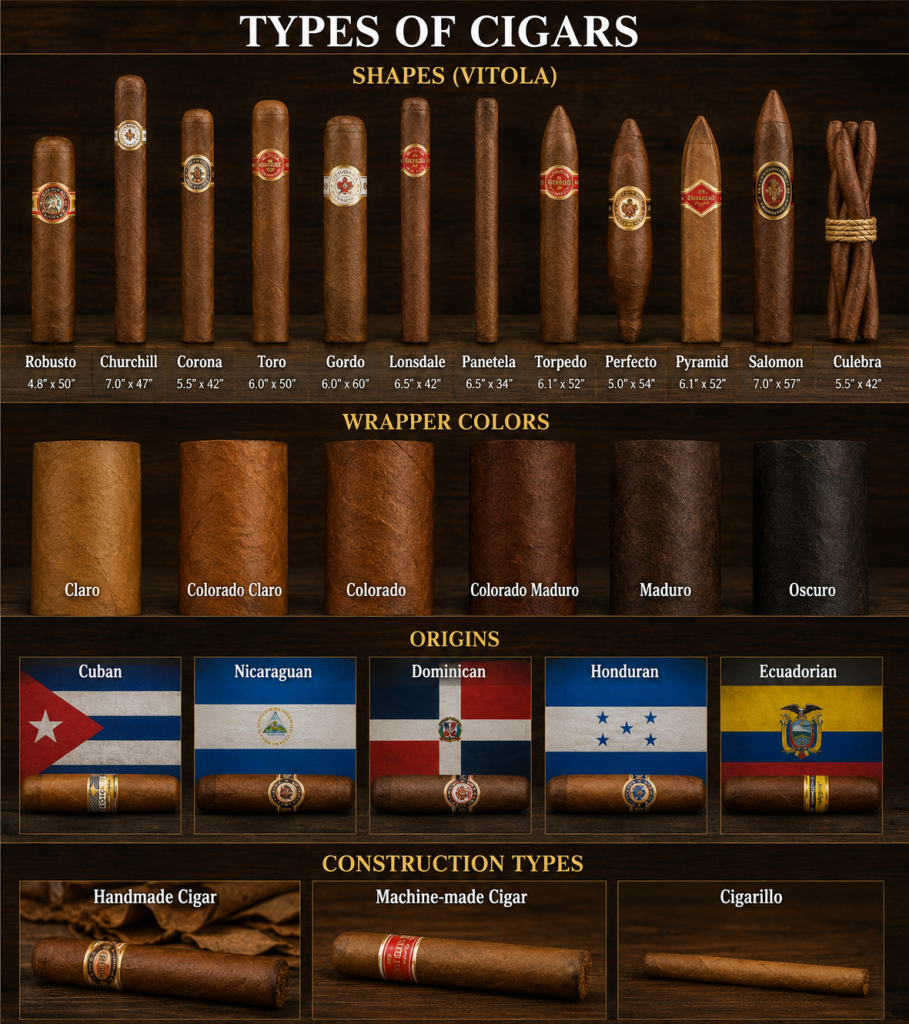
There are three primary ways to classify types of cigars: by shape (vitola), by wrapper leaf color, and by country of origin. Understanding all three dimensions is essential for selecting a cigar that matches your preferred strength, burn time, and flavor profile.
How Cigars Are Classified
Every premium cigar consists of three components: the filler, the binder, and the wrapper. The wrapper leaf has the greatest influence on flavor, while the shape determines burn rate and smoke concentration. Tobacco originating primarily from Cuba, Nicaragua, the Dominican Republic, Honduras, and Ecuador defines the underlying flavor character.
Types of Cigars by Shape (Vitola)
Cigar shapes fall into two main categories: parejos (straight-sided) and figurados (irregular shapes).
Parejos: Straight-Sided Cigars
Parejos are the most common types of cigars available and include the following primary formats.
Robusto measures approximately 5 inches in length with a 50 ring gauge. It is one of the most popular types of cigars globally due to its balanced smoke time of roughly 45 minutes and concentrated flavor delivery.
Churchill runs 7 inches long with a 47–50 ring gauge. Named after British Prime Minister Winston Churchill, this format offers a longer, cooler smoke and is associated with brands such as Romeo y Julieta and Davidoff.
Corona is a classic format at approximately 5.5 inches with a 42 ring gauge. It produces a tighter draw and higher combustion temperature, which intensifies pepper and spice notes in the first third.
Toro measures 6 inches with a 50 ring gauge. It sits between the robusto and Churchill in terms of smoke time and is one of the fastest-growing types of cigars in the premium market.
Gordo (also called a 60-ring cigar) features a ring gauge of 60 or above. The wider diameter allows for more filler tobacco combinations, which blenders use to create complex layered flavors.
Lonsdale reaches 6.5 to 7 inches with a 42–44 ring gauge. Its narrow gauge relative to its length produces a longer, spicier, and more herbaceous smoke compared to wider formats.
Panetela is a slim, elegant format at 5–7.5 inches with a ring gauge below 40. It burns fast and hot, making it a short-session option favored in Cuban tradition.
Figurados: Shaped Cigars
Figurados require more skilled hand-rolling and are considered a distinct category within the types of cigars.
Torpedo (also called a Belicoso) has a pointed, tapered head and a ring gauge of 52–54. The pointed tip concentrates smoke, intensifying flavor in the first few puffs.
Perfecto is closed at both ends with a bulging center. It requires the smoker to cut both ends and was historically the dominant format before the 20th century standardized parejos.
The pyramid tapers from a wide foot (around 52 ring gauge) to a narrow pointed head (around 40). The expanding smoke chamber cools the draw progressively as the cigar burns.
Salomon combines features of the perfecto and torpedo into an elongated figurado. It is one of the most complex types of cigars to produce and commands premium pricing from makers such as Arturo Fuente and Padrón.
Culebra consists of three panetelas braided together and smoked as a single unit. It is rare in the modern market and is primarily produced as a novelty or collector’s format.
Types of Cigars by Wrapper Color
Wrapper leaves are graded on a spectrum from lightest to darkest, and each grade corresponds to a distinct flavor profile.
Claro is a pale greenish-tan wrapper, typically shade-grown in Connecticut. It produces a mild, creamy, and slightly sweet smoke. Connecticut Shade from the Connecticut River Valley is the definitive example.
Colorado Claro is a light tan to medium brown wrapper. Ecuadorian Connecticut wrappers fall in this category and deliver a balanced medium body with nutty and cedar characteristics.
Colorado is a rich reddish-brown wrapper often associated with Cameroon or Honduran tobaccos. It offers medium strength with pronounced earthiness and dried fruit notes.
Colorado Maduro sits between Colorado and full maduro. Dominican and Nicaraguan wrappers often fall here, combining medium body with subtle sweetness.
Maduro is a dark, oily wrapper that has undergone extended fermentation, typically 90 to 180 days, to break down starches into natural sugars. Nicaraguan, Brazilian (Arapiraca), and San Andrés Mexican leaf are primary maduro sources. Maduro wrappers produce coffee, chocolate, and dark fruit flavors with reduced harshness despite higher tobacco concentration.
Oscuro (also called Double Maduro) is the darkest available wrapper, fermented longer than standard maduro. It delivers maximum sweetness and body and is primarily found on Nicaraguan puro cigars.
Types of Cigars by Tobacco Origin
The country of origin determines the chemical profile of the tobacco, which in turn defines core flavor characteristics.
Cuban cigars- produced exclusively under the Habanos S.A. license are regulated by the Consejo Regulador del Tabaco. Vuelta Abajo in Pinar del Río Province is the primary growing region and is internationally recognized for producing the benchmark wrapper, binder, and filler combination. Cohiba, Montecristo, and Partagás are among the most recognized Cuban brands.
Nicaraguan cigars – use tobaccos from Jalapa, Estelí, and Ometepe. Nicaraguan leaf typically delivers a full body with volcanic soil-derived earthiness, black pepper, and dark fruit. Brands such as Padrón, Oliva, and Rocky Patel produce flagship Nicaraguan lines.
Dominican Republic cigars – are known for lighter, more nuanced profiles. The Cibao Valley produces tobaccos with mild strength and creamy texture. Arturo Fuente, La Flor Dominicana, and Davidoff are prominent Dominican producers.
Honduran cigars – from the Jamastran Valley, offer medium to full body with a distinctive woody and leathery character. Rocky Patel and Alec Bradley are major users of Honduran leaf.
Ecuadorian tobacco – is primarily used as a wrapper leaf rather than filler or binder. Ecuador’s cloud-covered growing regions replicate shade conditions naturally, producing silky, consistent wrappers used in many non-Cuban premium types of cigars.
Machine-Made vs. Handmade Types of Cigars
Handmade premium cigars use long-filler tobacco whole leaves running the length of the cigar and are bound and wrapped by a single torcedor using a chaveta and a mold. Long-filler construction produces an even burn and full flavor development.
Machine-made cigars use short-filler (chopped tobacco) and homogenized tobacco leaf (HTL) binders. Brands such as Swisher Sweets, Phillies, and Dutch Masters produce machine-made cigars, which are lower in cost and designed for high-volume production rather than flavor complexity.
Cigarillos are a subset of machine-made types of cigars. They are small, thin, often flavored, and measure under 4 inches with a ring gauge below 30. Café Crème and Café Noir by Henri Wintermans are widely distributed examples.
How to Choose Between Types of Cigars
Strength preference is the most practical starting filter. Ligero leaves from the top of the tobacco plant carry the highest nicotine concentration and are used in full-strength blends. Seco and Volado leaves contribute to combustion and balance, respectively, and are dominant in milder cigars.
Smoke time correlates directly with size. A robusto averages 45 minutes; a Churchill runs 90 minutes or more.
Occasion influences format. A panetela or small corona suits a short break; a torpedo or Churchill suits a long evening session.
Flavor targets the wrapper and origin. Maduro wrappers with Nicaraguan filler deliver maximum intensity. Connecticut Shade wrappers on Dominican filler produce the mildest, creamiest profile available across types of cigars.
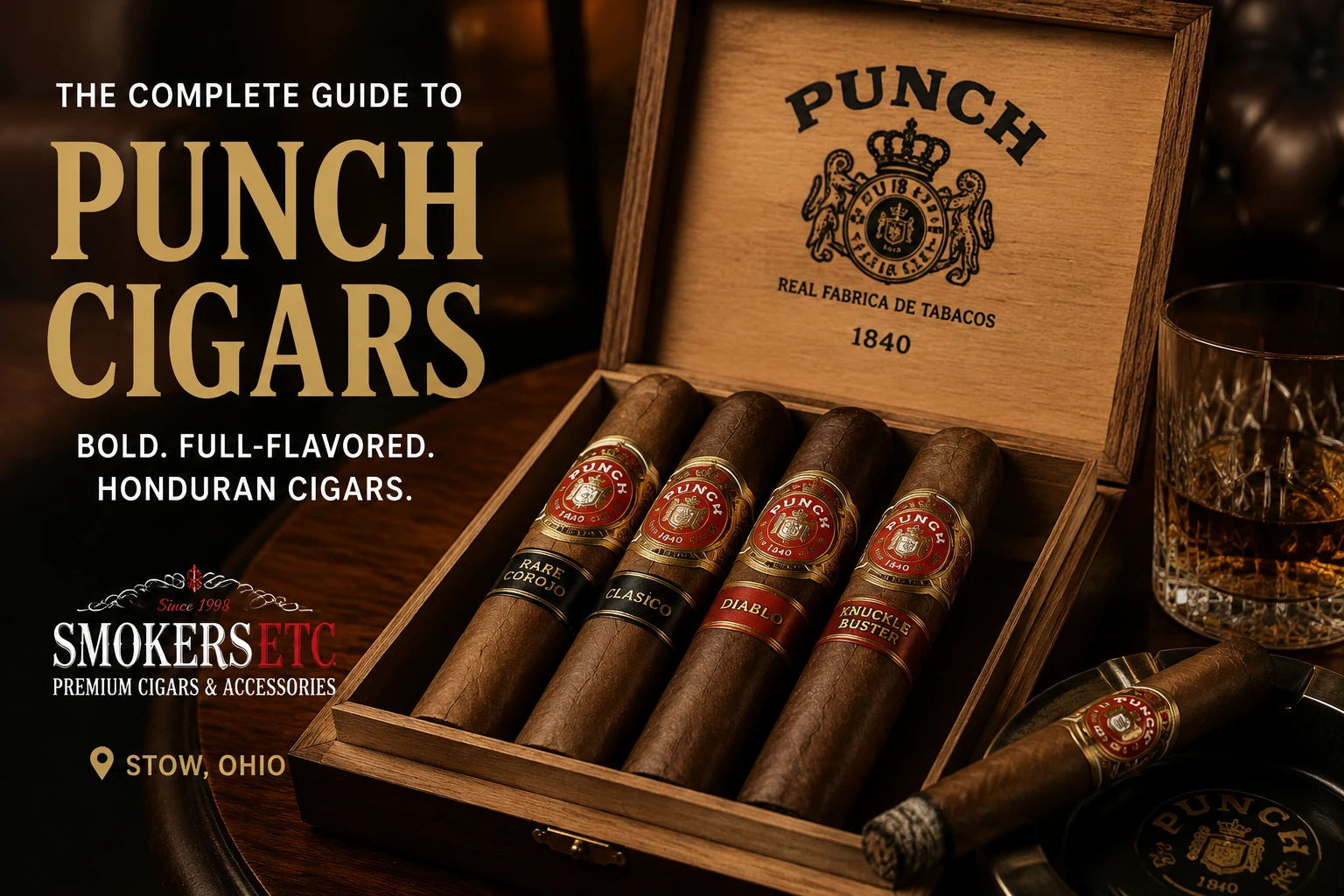
If you want to taste these types of cigars, check out our store here.
Frequently Asked Questions About Types of Cigars
What are the most common types of cigars for beginners?
The robusto and corona are the most recommended starting formats. Both offer manageable smoke times and support mild to medium-strength blends. Connecticut Shade or Colorado Claro wrappers are the standard recommendation for first-time smokers.
What is the difference between a torpedo and a robusto?
A robusto has a straight, open head, while a torpedo has a tapered, pointed head. The torpedo’s shape concentrates smoke at the tip and produces more intense initial flavor before opening up in the mid-section.
Are Cuban cigars the best type of cigars?
Cuban cigars hold a benchmark status due to the unique terroir of Vuelta Abajo, but Nicaraguan and Dominican cigars regularly receive equivalent or higher ratings from publications such as Cigar Aficionado. Quality is blend- and production-specific rather than automatically determined by origin.
What does ring gauge mean in cigar sizing?
Ring gauge measures the diameter of a cigar in 64ths of an inch. A 50-ring-gauge cigar is 50/64ths of an inch in diameter, approximately 20 millimeters. Higher ring gauges allow more complex filler blends and slower, cooler combustion.