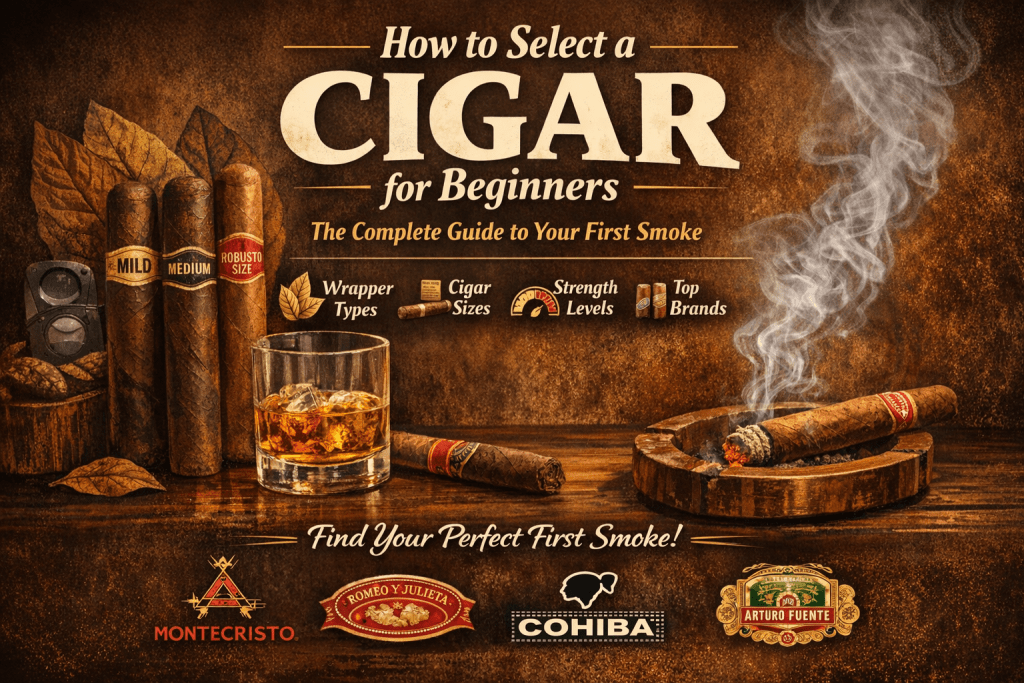
So, you’ve decided to step into the world of cigars. Maybe a friend handed you one at a celebration, or you’ve seen someone on a patio savoring a slow, deliberate smoke and thought I want that experience. Whatever brought you here, learning how to select a cigar for beginners is the smartest first move you can make before lighting up.
The cigar world is rich, complex, and honestly a little overwhelming at first glance. There are hundreds of brands, dozens of sizes, multiple strength levels, and a whole vocabulary that can make your head spin. But here’s the truth: picking your first cigar doesn’t have to be complicated. With the right guidance, you can walk into any cigar shop with confidence and walk out with something you’ll genuinely enjoy.
This guide covers everything you need from understanding tobacco wrappers and cigar anatomy to strength profiles, sizes, and the best beginner-friendly brands. We’ll also answer the most common questions beginners have, so by the end, you’ll know exactly what to look for.
What Makes a Good Beginner Cigar?
Before diving into specifics, it helps to understand what qualities matter most when you’re just starting out. A good beginner cigar shares a few common traits:
- Mild to medium strength — High-nicotine cigars can cause dizziness or nausea if you’re not accustomed to tobacco
- Smooth, creamy, or slightly sweet flavor — Easy on the palate without harsh or bitter notes
- Well-constructed draw — Not too tight, not too loose; you want consistent airflow
- Reasonable price point — No need to spend $30 on your first cigar; great options exist at $8–$15
With these criteria in mind, let’s build your foundation.
Understanding Cigar Anatomy: Know What You’re Holding
Every cigar has three main components, and knowing them helps you evaluate quality before you even light up.
The Wrapper
The wrapper is the outermost leaf, the one you see and touch. It plays a surprisingly large role in flavor, accounting for up to 60% of the smoke’s taste profile. Wrappers range from light (Claro/Natural) to dark (Colorado, Maduro, Oscuro). As a beginner, look for Natural or Colorado wrappers; they tend to be smooth, slightly earthy, and approachable.
The Binder
Beneath the wrapper is the binder leaf, which holds the filler together. The binder adds body and structure to the smoke. You won’t see it, but it contributes significantly to the overall burn and flavor profile.
The Filler
The filler is the core of the cigar, a blend of tobacco leaves that determines most of the strength and character. Premium cigars use long-filler tobacco (whole leaves), which burns more evenly and consistently than short-filler scraps used in cheaper cigars.
Cigar Sizes and Shapes: What Beginners Should Know
Cigars come in a dizzying range of sizes and shapes. Here’s a simplified breakdown to help you choose:
Common Sizes (Vitolas)
| Name | Length | Ring Gauge | Smoke Time |
|---|---|---|---|
| Robusto | 5 inches | 50 | 45–60 min |
| Corona | 5.5 inches | 42 | 40–55 min |
| Churchill | 7 inches | 47 | 90+ min |
| Toro | 6 inches | 52 | 60–75 min |
| Petit Corona | 4.5 inches | 42 | 30–40 min |
Best size for beginners: The Robusto is widely considered the ideal starter size. It’s not too long, has a satisfying ring gauge for a full draw, and delivers a complete flavor experience in about an hour.
Shapes: Parejos vs. Figurados
- Parejos (straight-sided cigars like Coronas and Robustos) are easier to cut and light evenly — perfect for beginners
- Figurados (tapered shapes like Torpedos and Perfectos) are more complex to smoke and better suited for experienced smokers
Stick with a Parejo shape when you’re starting out.
Cigar Strength Levels: Start Mild, Work Your Way Up
Cigar strength refers to nicotine content and body, not harshness. A mild cigar can still be full of flavor. Here’s the spectrum:
Mild
Gentle on the palate, low nicotine, creamy and smooth. Ideal if you’ve never smoked or rarely smoke. Think Connecticut Shade wrappers, silky, light golden color, and buttery flavor.
Medium
A step up in complexity and body. Some pepper notes, more depth, still approachable. The sweet spot for most beginners is once they’ve had a few smokes.
Full
Bold, powerful, complex, and not where you want to start. Full-strength cigars can overwhelm a first-timer, causing nicotine sickness (lightheadedness, nausea) even in experienced smokers who haven’t eaten.
Beginner recommendation: Start with mild, then explore medium after your second or third smoke.
The Role of the Wrapper Color
One of the easiest ways to gauge a cigar’s strength before smoking is by wrapper color. Here’s a quick reference:
- Claro (light tan): Very mild, subtle, often Connecticut Shade
- Natural (light to medium brown): Mild to medium, smooth, and accessible
- Colorado (medium reddish-brown): Medium body, balanced flavor
- Colorado Maduro: Richer, slightly sweet
- Maduro (very dark brown): Full-bodied, sweet notes of coffee, chocolate, earth
- Oscuro (black): Very powerful, not for beginners
As a beginner, target Natural or Colorado wrappers. Many experienced smokers also recommend Maduro for beginners due to its natural sweetness, which can be more enjoyable than harsh, peppery alternatives.
Top Cigar Brands Perfect for Beginners
Choosing a reputable brand takes the guesswork out of quality. These are brands that consistently deliver well-made, flavorful cigars accessible to new smokers.
Montecristo Cigars
One of the most iconic names in cigar history, Montecristo Cigars offers an incredibly balanced smoke profile. Their Classic line, especially the No. 2 and No. 4 sizes, is legendary among beginners and seasoned aficionados alike. The flavor is creamy, slightly nutty, and utterly consistent, exactly what you want when you’re learning what you like.
Romeo y Julieta Cigars
A beloved brand with centuries of history, Romeo y Julieta Cigars are widely praised for their approachability and elegance. Their Reserva Real line is a particularly excellent starting point, mild to medium-bodied, with a smooth Connecticut wrapper that makes for an effortless, enjoyable smoke. If you want a classic name that virtually any cigar shop will carry, Romeo y Julieta is a safe bet.
Cohiba Cigars
Cohiba Cigars are synonymous with prestige, and for good reason. Originally crafted exclusively for Fidel Castro, Cohiba’s quality is unmatched. Their Blue line (Dominican Cohiba) is more beginner-friendly than the Cuban originals medium-bodied, refined, and consistently excellent. Cohiba commands a premium price, but the experience is worth it for a special occasion.
Padron Cigars
For those interested in Nicaraguan tobacco, The Ultimate Guide to Padron Cigars: History, Flavors, and Smoker’s Experience reveals just how extraordinary this brand is. The Padron 2000 Natural is a fantastic entry-level option, earthy, slightly sweet, and beautifully constructed. Padrón ages their tobacco for a minimum of 2.5 years, which contributes to an exceptionally smooth smoke.
Arturo Fuente Cigars
A cornerstone of Dominican cigar craftsmanship, the Arturo Fuente Cigars Review: Dominican Craftsmanship at Its Finest showcases why this family-owned brand has earned global respect. Their Hemingway Short Story and the Flor Fina 8-5-8 are both mild to medium options with silky wrappers and naturally sweet flavor profiles. An Arturo Fuente cigar is a masterclass in precision and balance.
How to Buy Your First Cigar: Walk Into a Shop With Confidence
Knowing what to look for on paper is one thing. Walking into an actual cigar shop is another. Here’s how to have a great experience.
Visit a Reputable Tobacconist
Online purchases are fine once you know your preferences, but for your first cigar, visit a physical shop. Experienced tobacconists can guide your selection based on your taste preferences and budget. If you’re in the Midwest, check out Best Cigar Shop Akron Near Me Open Now Complete Local Guide for trusted local options.
Inspect the Cigar Before Buying
A quality cigar should feel:
- Firm but slightly pliable — too hard means dry and brittle; too soft means improperly humidified
- Smooth without cracks — check the wrapper for veins, discoloration, or splits
- Consistent from head to foot — uneven spots suggest poor construction
Ask the Tobacconist for Help
Don’t be embarrassed to say it’s your first cigar. Any good tobacconist will enjoy the conversation and help you find something perfect. Tell them your flavor preferences (sweet, earthy, spicy, creamy), your budget, and how long you want to smoke.
Consider a Sampler Pack
Many shops sell beginner sampler packs of three to five cigars at different strength levels for a discounted price. This is an excellent way to explore without committing to a full box.
How to Cut and Light a Cigar (The Basics)
You’ve picked your cigar. Now what?
Cutting
Always cut above the cap line using a quality guillotine cutter or punch cutter. Cut about 1/16 to 1/8 of an inch from the cap. A ragged cut means a poor draw and a frustrating smoke.
Lighting
Never use a cheap butane lighter or a candle the sulfur and chemicals can alter the flavor. Use a torch lighter, cedar matches, or cigar matches.
Proper lighting steps:
- Toast the foot by holding the flame just below the tobacco. Don’t let the flame touch it yet
- Rotate the cigar slowly to get an even char
- Once the foot glows orange, place it in your mouth and draw gently while continuing to apply the flame
- Check for an even burn before taking your first real puff
How to Puff
Cigars are NOT cigarettes. Don’t inhale. Take slow, deliberate draws every 30–60 seconds and simply let the smoke roll around your mouth to experience the full flavor. Smoking too fast causes the cigar to run hot, which turns the flavor harsh and bitter.
How to Store Cigars Properly
Suppose you buy more than one cigar; storage matters. Cigars need to be kept at approximately 70% relative humidity and 65–70°F to stay fresh. A dried-out cigar will burn unevenly and taste terrible; an over-humidified cigar won’t draw properly.
Beginner storage solutions:
- Tupperdor: An airtight Tupperware container with a Boveda 69% or 72% humidification pack
- Travel humidor: Small cedar-lined cases perfect for a few cigars
- Desktop humidor: The classic option for storing 20–50 cigars with a built-in hygrometer
Don’t store cigars in the refrigerator the dry air will destroy them.
Common Beginner Mistakes to Avoid
Even with the best intentions, new cigar smokers often make a few predictable errors. Here’s how to sidestep them:
- Smoking too fast: The number one rookie mistake. Rushing causes the cigar to overheat, producing harsh, acrid smoke. Take your time.
- Inhaling the smoke: Cigar tobacco is much stronger than cigarettes. Never inhale — taste and enjoy.
- Re-lighting improperly: If your cigar goes out, gently blow through it to clear stale smoke, then re-toast the foot before relighting.
- Smoking into the band: Remove the band after the cigar has been lit for a few minutes — the heat loosens the glue gently without tearing the wrapper.
- Buying cheap cigars from gas stations: Machine-made bundle cigars with inferior tobacco. Spend your money at a real tobacconist.
Pairing Your Cigar: What to Drink Alongside It
The right drink amplifies your cigar experience significantly.
- Bourbon or Scotch: The sweet caramel and vanilla notes complement mild-to-medium cigars beautifully
- Coffee: A rich espresso or dark roast pairs naturally with earthy, creamy cigars
- Dark craft beer: A stout or porter echoes the coffee and chocolate notes in fuller cigars
- Rum: Especially with Maduro wrappers, the sweetness of rum and the natural sweetness of aged dark wrappers are a natural match
- Water: Never underestimate a glass of still water between puffs to cleanse the palate
Avoid sweetened sodas or citrus drinks; the acidity clashes with tobacco flavors.
Frequently Asked Questions: How to Select a Cigar for Beginners
What is the best cigar for a first-time smoker?
The best cigars for first-time smokers are mild to medium-bodied options with Connecticut Shade or Natural wrappers. Top picks include the Montecristo Classic No. 4, Romeo y Julieta Reserva Real, and Arturo Fuente Flor Fina 8-5-8. These are smooth, well-constructed, and forgiving for newcomers.
How much should I spend on my first cigar?
You don’t need to spend a fortune. A quality beginner cigar typically costs between $8 and $15. Spending more doesn’t automatically mean a better experience for someone still developing their palate. As you grow and learn what you enjoy, you can invest in premium options like Cohiba or Padrón.
Should I smoke a mild or medium cigar first?
Start mild. Mild cigars are lower in nicotine and gentler on the palate, which means you’re more likely to enjoy the experience without dizziness or nausea. Once you’ve smoked two or three cigars and feel comfortable, move up to medium-bodied options.
What’s the difference between a Robusto and a Toro?
A Robusto is shorter (around 5 inches) with a 50 ring gauge, offering a 45–60 minute smoke. A Toro is slightly longer (around 6 inches) with a 52 ring gauge, giving you 60–75 minutes of smoke time. Beginners often prefer the Robusto for its manageability.
Is a dark wrapper always stronger?
Generally, yes, but not always. Maduro wrappers are dark and often full-bodied, but they also carry a natural sweetness that many beginners enjoy. When in doubt, ask your tobacconist.
Can I smoke a cigar if I’ve never smoked before?
Yes. The key is to start with a mild cigar, smoke slowly, never inhale, and make sure you’ve eaten a meal beforehand. Nicotine on an empty stomach can cause lightheadedness even in experienced smokers.
How long does a beginner cigar take to smoke?
A Robusto or Corona-sized cigar takes approximately 45 to 60 minutes. A Churchill can take over 90 minutes. For your first smoke, a Robusto or Petit Corona is ideal long enough to enjoy the experience, short enough that you won’t feel rushed.
Where is the best place to buy cigars for beginners?
Always buy from a reputable tobacconist or cigar shop with a proper walk-in humidor. If you’re in the Akron, Ohio area, check out our Best Cigar Shop Akron Near Me Open Now – Complete Local Guide for reviewed local options.
What does “ring gauge” mean?
Ring gauge refers to the diameter of the cigar, measured in 64ths of an inch. A 50-ring gauge cigar is 50/64ths of an inch in diameter. A higher ring gauge means a thicker cigar, which tends to smoke cooler and slower, generally a better experience for beginners.
Should I remove the band before smoking?
You can leave the band on or remove it’s a personal preference. If you choose to remove it, wait until the cigar has been burning for a few minutes so the heat loosens the glue naturally without tearing the wrapper.
Final Thoughts: Your Journey Into Cigars Starts Here
Learning how to select a cigar for beginners is really about understanding your own preferences and that takes a little exploration. Start with a mild, well-made cigar from a trusted brand like Montecristo, Romeo y Julieta, or Arturo Fuente. Visit a real cigar shop, ask questions, and don’t rush the experience.
The beauty of cigars lies in their complexity and the ritual around them the slow contemplation, the evolving flavors, the companionship of good conversation or quiet solitude. It’s one of the few remaining pleasures that demands you slow down and pay attention.
As your palate develops, you’ll naturally want to explore bolder profiles the earthy power of a Padrón, the refined elegance of a Cohiba, or the storied heritage of a Romeo y Julieta. But every great cigar journey begins with a single, perfect first smoke.